Leeks are a very useful winter crop that can withstand harsh winters, they grow well at Ashbrook.
They are also a very useful catch crop that can be transplanted in July when early potatoes, peas or broad beans have been cleared. Leeks are an allium so avoid planting them in ground from which shallots or onions have been cleared, also avoid planting in ground suspected of being infected with onion white rot.
Seed is sown in the spring in seed trays, pots or in a seed bed, germination takes about three weeks. My leek seed is sown in April in ½” deep drills in a seed bed on my allotment and is immediately covered with insect mesh as pest protection.
The plants are grown on until they are about the size of a pencil and then transplanted to their final positions in July. If the ground is dry water the plants the day before transplanting. I trim the leaves and roots by half to encourage fresh root growth and so the remaining leaf stands upright, if untrimmed some leaves often wilt and can be drawn underground by worms resulting in the young plant being pulled over.
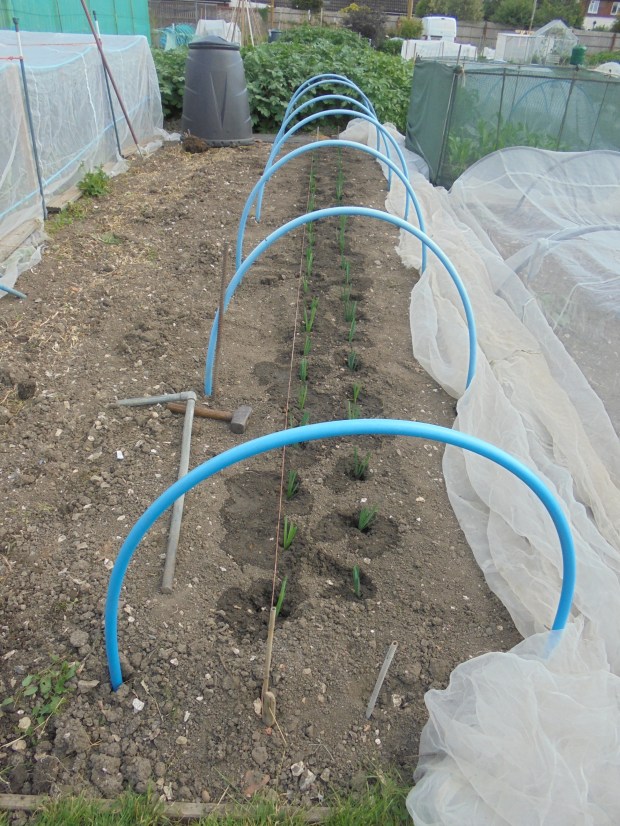
Leeks do best in fertile soil so a dressing of a general fertiliser such as fish, blood and bone raked in before planting will help. Form planting holes about 15cm (6”) deep using a dibber and transplant into double rows allowing about 30cm (12”) each way, and water each plant in. If the ground is dry keep the plants watered for a few days until they establish and start growing strongly.
Leek moth arrived at Ashbrook in 2012 and is now with us for keeps, that autumn many of us had our plants damaged. During April the adults emerge from overwintered pupae and lay the first generation of eggs which hatch, mature quickly and lay the next generation of eggs during July and August. Larvae from this second hatching causes damage apparent from September and into winter.
Another similar pest that arrived recently and is now also with us for keeps is allium leaf minor. The first generation of this pest is again laid in April, similar to leek moth but the second generation of eggs is laid a bit later in October and November.
The two pests are often confused however, being a moth, leek moth larva are small caterpillars and therefore have tiny legs, allium leaf miner is a fly hence the larvae is a maggot, i.e., no legs.
With both pests the damage is similar, leaves appear distorted, often have light green spots, seem slug damaged and larvae tunnelling within the shank cause further damage often leading to botrytis. The larvae overwinter as pupae in the soil or in old crops and foliage and hatch out the following spring to repeat the cycle. Any plants found with these pests should not be put on a compost heap
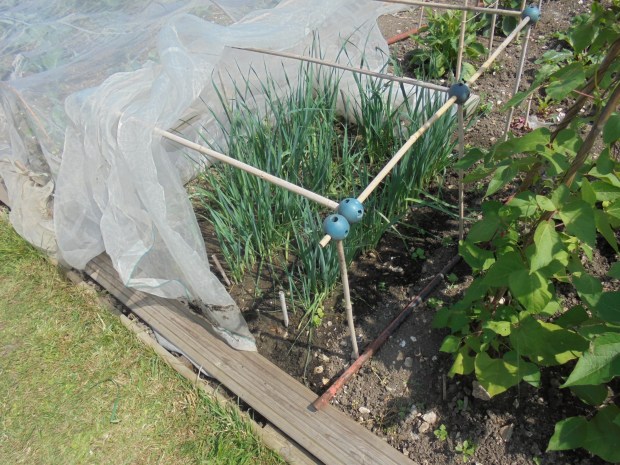
You can take a chance that these pests avoid your crops however the best solution is to cover plants with insect mesh, 1.6mm mesh is adequate, supported on either a timber frame or polythene tubing from planting out until about early December by which time any surviving adults and their pupae will be hibernating elsewhere. When weeding remove the protection only during damp or windy weather when pests are less likely to be on the wing. I now cover my leeks from the time of seed sowing in April, again when transplanted in July and right up to early December when all risk is gone and have no problem.
Leeks are also prone to rust; this often appears during wet and humid weather in the autumn. Although this can disfigure the foliage the edible part is generally unaffected. Rust infected material is best disposed of away from the site and not composted.
Suggested varieties: –
- Musselburgh – an old and reliable Scottish variety.
- Toledo – This one has produced good leeks for me over many years and gives long shanks for use between November and March.
- Below Zero – An F1 variety reputed to be rust resistant, I grew it for the first time in 2017 and although mine had some rust for a while they did recover and produced very good leeks from November until February.
 Ashbrook Allotments