Potatoes are one of the most popular crops for the allotment. They are categorised as: –
- First early: normally planted mid/end March-should be ready in 10-12 weeks i.e., June/July.
- Second early: planted early April-should be ready in 13-15 weeks i.e., July/August.
- Early main crop: planted mid-April-should be ready in 15-18 weeks i.e., end of August/September.
- Late main crop: planted mid-April- should be ready in 20-24 weeks i.e., second half of September.
Obviously, the above planting times might be influenced slightly by the weather.
Potatoes can be further categorised as waxy (firm salad type more suited to steaming or par boiling) or floury (more suited to mashing, roasting and chipping)
The most problematic disease we experience with potatoes is blight which appears when the combination of humidity over 90% and successive night temperatures above 10C occur. At Ashbrook blight normally arrives during July although some years as in 2016 it occurred in June. At one time it was possible to protect our crops with fungicide however with the far more aggressive strains of blight that have been imported there are now no effective products available to the amateur, also many allotment gardeners prefer their crops grown without fungicide. If you find potato blight a problem there are two choices.
a) Firstly, grow varieties that will have produced a worthwhile crop before this disease arrives.
b) Alternatively, grow varieties that have blight resistance and crop later.
Because potatoes are also prone to many pests and diseases other than blight is good practice to only use certified disease-free seed which is produced under very strict conditions to ensure it is clean. Your own seed saved from last year or culinary potatoes are not grown under such strict conditions and could unwittingly overwinter or import yet another pest or disease. Certified seed can be purchased from most seed companies, garden centres and DIY stores however the most economic places are local horticultural trading huts who take orders in September and October for collection the following February.
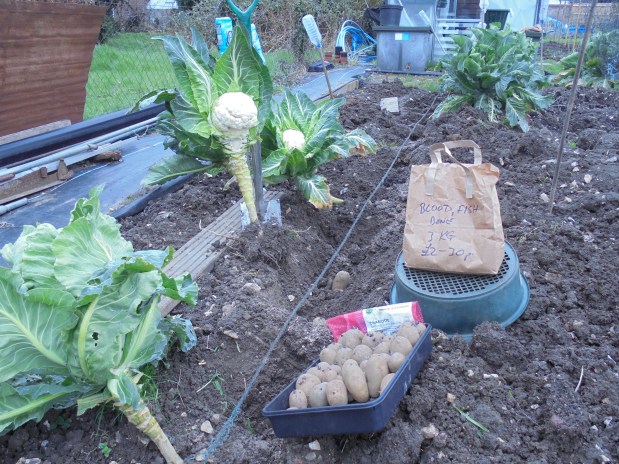
Once you have obtained your seed potatoes place them eyes up in egg cartons or seed trays in a cool, frost free, well-lit area to chit. Plant into prepared ground, there are several ways to do it. Some gardeners dig a trench into which the tubers are placed, others just form a 6” hole with a trowel or border spade, some make a hole with a bulb planter, the choice of method is yours. Potatoes are hungry feeders so a dressing of potato fertiliser, blood, fish and bone or Growmore along the row will help.
| Suggested planting distances: | Planting Depth | Between Tubers | Between Rows |
| Early & Second Early | 15cm (6”) | 30cm (12”) | 60cm (24”) |
| Main Crop | 15cm (6”) | 40cm (16”) | 70cm (27”) |
| (Sarpo Mira) | 15cm (6”) | 45cm (18”) | 90cm (36”) |
When planting earlies and second earlies some growers reduce the number of eyes to two or three so the plant puts all its energy into fewer but bigger potatoes.
Asbrook can be prone to late frost and potato foliage is not hardy so when growth emerges and if a cold night is forecast be prepared to protect your plants by covering the exposed growth with soil (earthing up), this also excludes light from the developing crop preventing the new potatoes going green, it also gives greater volume of soil in which the crop can develop and to some extent reduces the risk of tuber blight. If only a small amount of foliage is showing and you are short of time a shovel full of soil or compost or an upturned flowerpot provides temporary protection until the whole row can be earthed up. Fleece can also be used but for it to be effective the material needs to be above the plant to ensure an insulating air space, frost will go straight through fleece in contact with foliage.
Most gardeners let the foliage of their plants sprawl on the ground which is fine, however some train it vertically so as to expose the leaves to maximum daylight and this should give a larger crop.
Blossom appearing on potato plants is not a sign they are ready to lift. Some growers remove blossom as it appears so as to keep the plants in vegetative state resulting in a better yield.
At Ashbrook first early potatoes planted in the ground sometimes produce a very small crop mainly due to their shorter season of growth, our soil often still being cold at planting time, then during May/June just when the crop needs moisture for bulking the ground dries out. Try some by all means but be warned. However early potatoes grown in bags produce a far heavier crop.
Good early varieties are Accent, Casablanca, Lady Crystal, Vanessa and Foremost. If planted at the correct time early potatoes should be ready for lifting before blight arrives.
Second early potatoes generally produce a better yield than first earlies largely due to their longer season of growth although they might succumb to blight in July. This can partly be overcome by planting in very early April so the crop has enough time to bulk adequately before blight arrives. Good second early potatoes are Nadine, Kestral and Charlotte. For many gardeners Charlotte is the best waxy (salad) potato and the benchmark against which others are compared, it also stores quite well. If it escapes blight and enjoys good growing conditions Charlotte can produce a large crop of quite big potatoes.
Many of the main crop varieties we have used in the past now regularly succumb to the far more aggressive strains of potato blight that are now around and affect our plants long before they have produced a worthwhile crop. Cara and Valor still seem to have some resistance and often crop well but both can be prone to slug damage. Some gardeners are still successful with Desiree but many find it succumbs to blight long before a decent crop has formed.
You may have been fortunate and escaped blight and if so, obviously continue growing the varieties you do well with. However, many gardeners now find the solution is to grow blight resistant varieties such as the Sarpo range. These come out of the Sarvari Research Trust breeding programme aimed at producing resistant varieties.
There are several well worth trying: –
- Sarpo Mira: A red late main crop potato that currently has excellent blight resistance and if given a long season of growth produces a huge crop of very large potatoes. Due to its blight resistance Sarpo Mira is currently the premier allotment potato. It produces huge foliage but can suffer from hollow heart and is best lifted quickly if towards the end of September heavy rain is forecast.
- Sarpo Axona: A red main crop potato similar to Mira but not so heavy cropping.
- Sarpo Una: A red waxy second early potato.
- Sarpo Kifli: A white waxy early main crop potato.
- Sarpo Shona: A white early main crop potato
- Blue Danube: A blue skinned white fleshed early main crop potato, very good for roasting.
Of them all Sarpo Mira is by far the heaviest cropper and the most readily available. During the spring some local garden centres and major seed companies do stock seed tubers of Mira however the most economical way to purchase them is from a local trading hut such as the one at Dagnall
The other Savari varieties are not so widely available but are normally offered by some of the major vegetable seed suppliers and can sometimes be obtained via one of the local horticultural society purchasing schemes or the Savari on line shop although do order early as it seems common for supplies to run out. In 2020 and 2021 Dobbies stocked small bags of 10 Blue Danube tubers.
Early and second early potatoes are generally best left in the ground and dug up as required.
Main crop potatoes are generally lifted in one go when ground conditions are good, dried for an hour or two then stored in paper or hessian sacks in a cool frost proof shed. Isolate any damaged ones and use them first, the rest should keep until about March or early April the following year.
If your own available time prevents part of your plot being cultivated or you are breaking in a weedy plot it can be kept under reasonable control for the summer by planting potatoes. So long as the ground is not too panned it can be planted with little cultivation, light forking along the rows should be fine. Select a late main crop variety with blight resistance and heavy weed suppressing foliage that keeps growing until the crop is lifted such as Sarpo Mira. Potatoes are heavy feeders so in case your soil is low in nutrient give a dressing of fertiliser such as blood, fish and bone and plant mid-April, 45cm (18”) apart in rows 90cm (3’) apart to allow room for good earthing up. Earth up as they come through using a hoe or border spade, probably twice so as to disturb weed growth as much as possible. Lift at the end of September along with any remaining perennial weeds. This will give you a rewarding crop, keep the ground reasonably clean and leave it clearer for the following year.
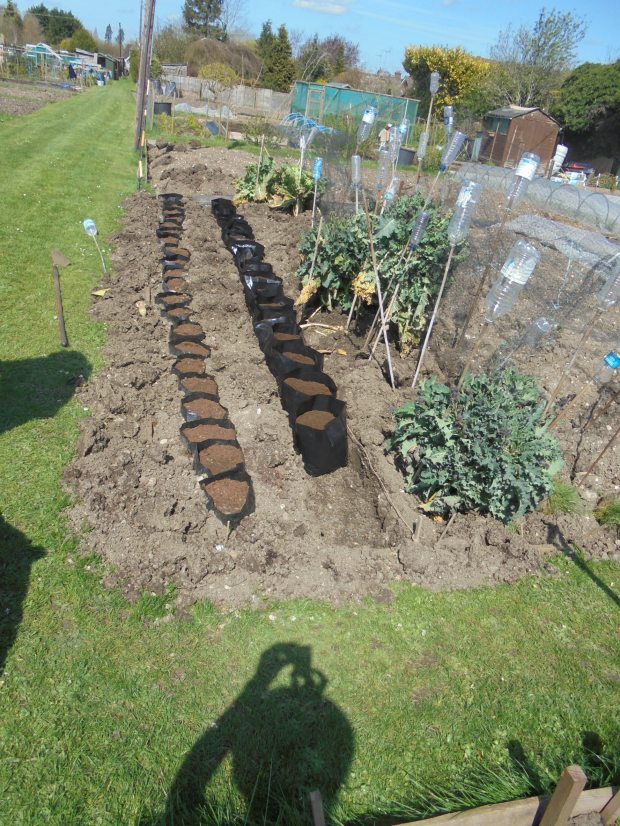
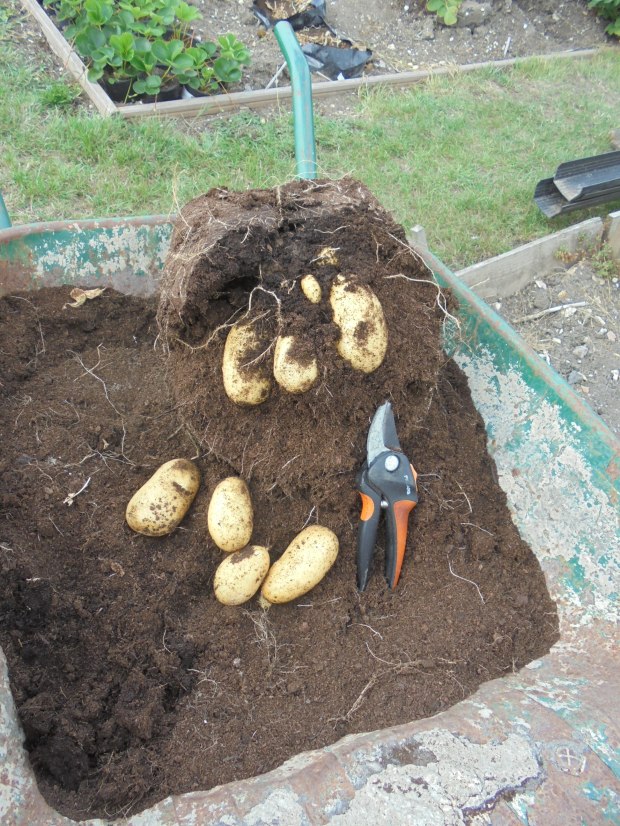
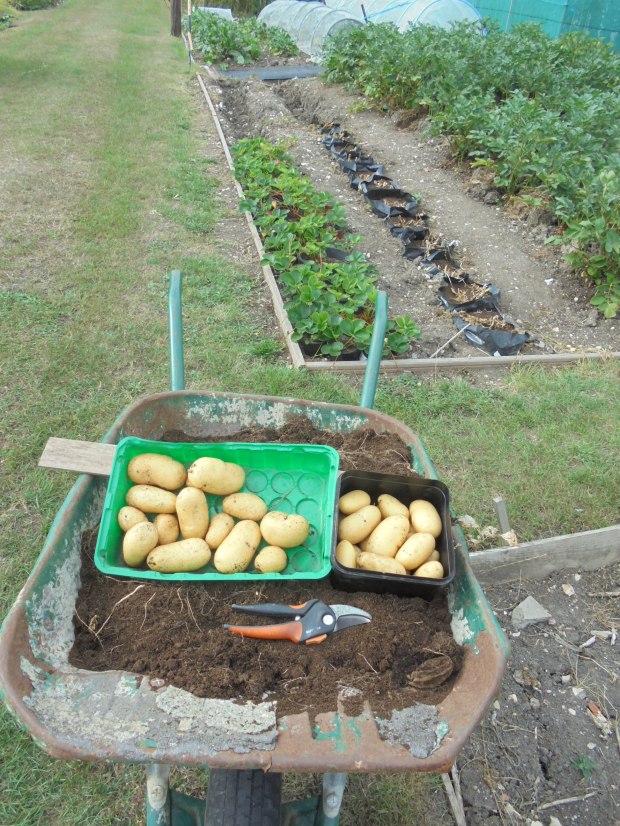
Potatoes can also be grown very successfully in containers and bags, the best being the black 14 litre polythene bags sold in local trading huts and used by exhibitors. The holes in these bags are often too small so cut five or six more about ¾” or 18mm diameter around the bottom edge. Best results will be achieved by using proper potato compost which has the correct nutrients alternatively a multipurpose compost and mix in potato fertiliser. Put one potato in each bag on about 1” of compost, then fill the bag to within an inch of its top with compost. Dig a shallow trench about 9” deep into which the bags are placed. If necessary temporary frost protection is easy using upturned pots and a couple of layers of fleece. There is no need to earth up potatoes grown this way. By cutting larger holes in the bags and sitting them in a trench means the roots can escape out of the bag to find more moisture and nutrient in your soil yet the crop remains inside the bag and keeps very clean, as the bag is sunk into the ground the roots keep cooler in the summer sun. As the potatoes start bulking keep the bags well-watered, a couple of feeds of liquid Maxicrop or similar will help. When ready, stop watering, cut back the haulm, leave for a few days for the compost to dry, lift the bags and either tip out and use straight away or store somewhere dry and cool until required. The potatoes keep better if left in the bags in a cool shed until required for use. Early potatoes perform very well grown this way resulting in a far heavier yield than those put directly in the ground, especially if watered regularly during bulking when they most need it. Grown in the ground watering tends to get ignored.
The disadvantages of growing potatoes in bags are: –
a) There is the additional cost of bags and compost although if retained, revitalised with fertiliser such as blood, fish and bone the compost is reusable the following year for other crops.
b) A shallow trench needs digging to set the bags in.
c) Fleece frost protection might be necessary for early plantings.
d) Regular watering is necessary as the crop starts to bulk.
The advantages of growing potatoes in bags are: –
a) No earthing up is necessary.
b) It is not necessary to dig the crop up; the whole bag with crop is easily lifted out of the ground and no self-setters are left behind to cause a nuisance in following years.
d) Provided potato compost is used and the bags are watered when the potatoes are bulking far heavier yields particularly of early and second early varieties are produced.
e) The crop is generally very clean.
f) When the bags are lifted the potatoes store very well if left in the bags of compost until required.
 Ashbrook Allotments